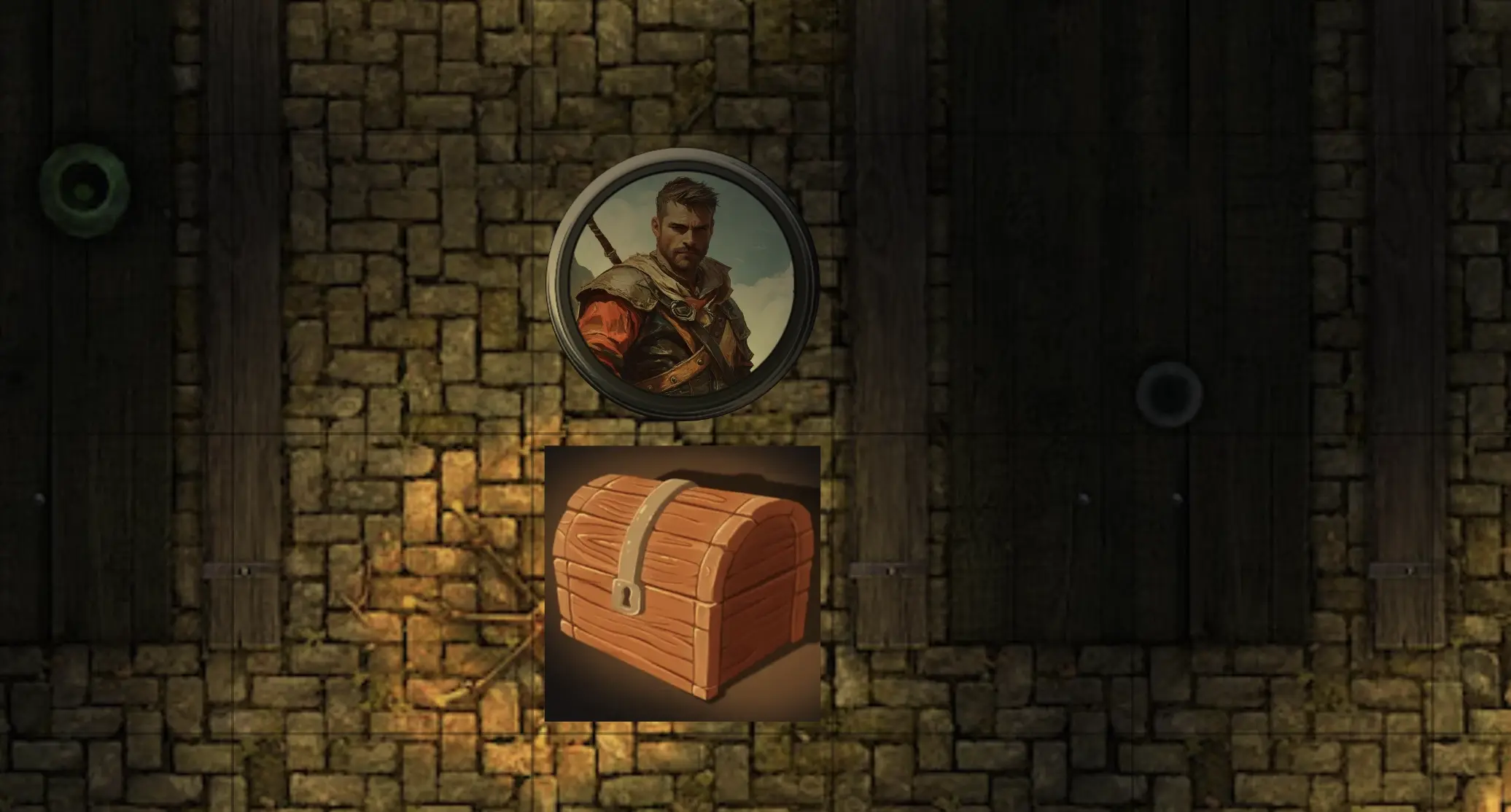
Few moments at the table match the excitement of finishing a tough fight and hearing "you loot the body." Treasure is one of the core reward loops in Dungeons & Dragons 5th Edition, and managing it well can make the difference between a campaign that feels rewarding and one that feels flat. Realm VTT features an easy-to-use loot system designed for D&D 5e that lets players quickly collect loot, gear, and treasure from defeated enemies and lootable chests. This interactive looting system improves your virtual tabletop gameplay by keeping treasure management simple and immersive.
Understanding D&D 5e Loot Types
Before diving into the how-to, it helps to understand what kinds of loot your players might find. D&D 5e treasure generally falls into a few categories:
Currency
Gold pieces (gp) are the backbone of the D&D economy, but you will also hand out copper (cp), silver (sp), electrum (ep), and platinum (pp). The Dungeon Master's Guide includes individual treasure tables (Tables A through D) and treasure hoard tables (Tables A through I) organized by challenge rating, giving you randomized currency amounts appropriate to the difficulty of the encounter.
Equipment and Gear
Weapons, armor, shields, and adventuring gear taken from defeated enemies. A bandit might carry a shortsword and leather armor. A hobgoblin captain might drop a longsword and chain mail. This kind of practical loot gives players direct upgrades or trade goods.
Magic Items
The most exciting drops in any campaign. Magic items in D&D 5e are organized by rarity: Common, Uncommon, Rare, Very Rare, and Legendary. A good rule of thumb is to match item rarity to the tier of play — Common and Uncommon items for levels 1 through 4, Rare items entering the mix around levels 5 through 10, and so on. Over-rewarding magic items early can flatten the power curve, while being too stingy can leave players feeling under-equipped.
Consumables
Potions, scrolls, and single-use items. These are a great way to give players tactical options without permanently increasing their power level. A well-placed Potion of Healing or Scroll of Fireball can make an encounter memorable without unbalancing the campaign.
Trade Goods and Art Objects
Gems, jewelry, tapestries, and other valuables that exist primarily to be sold. The DMG provides tables for art objects (worth 25 gp, 250 gp, 750 gp, 2,500 gp, or 7,500 gp) and gemstones at various value tiers. These are a flavorful way to distribute wealth without just dumping piles of gold.
How to Loot Enemies in Realm VTT
Here is how to handle looting a defeated enemy step by step:
- Right-click a defeated enemy's token and set its Faction to Friend (or press F to cycle factions).
- Players can double-click the NPC record and open the Gear tab.
- The designated looter drags items from the NPC's portrait into their Inventory tab.
- The loot instantly transfers to the player's sheet.
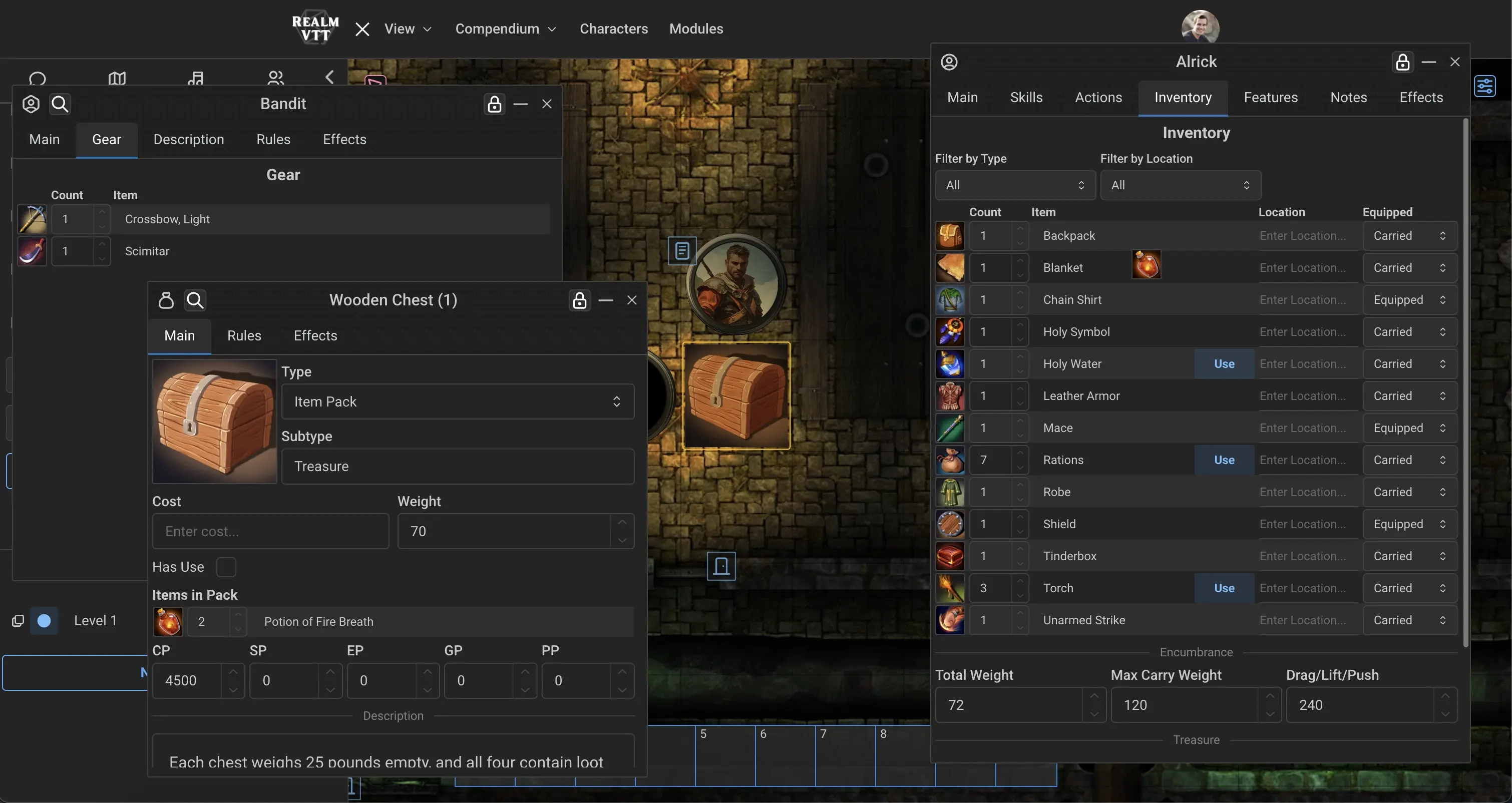
Setting the faction to Friend is what gives players access to the NPC's inventory. This is an intentional design choice — it keeps loot locked down during combat so players cannot grab items off an enemy mid-fight. Once the GM flips the faction, the body is fair game.
How to Make a Lootable Chest
Chests, crates, and other containers work through the Pack item type:
- Create a new Item in the compendium and set its Type to Pack.
- Add treasure by dragging items into the Items list.
- Assign any portrait image you want for your chest.
- Drag the chest into your Scene.
- Set its Faction to Friend.
- Players can now open the chest and drag items into their inventory.
This approach works for any kind of container — a locked strongbox in a noble's study, a hidden cache in a dungeon wall, or the saddlebags on a pack mule. Because the chest appears as a token on the map, players can walk up to it and interact with it naturally, keeping the experience immersive.
Loot Distribution Strategies
Handing out treasure is only half the challenge. Deciding who gets what can be a source of tension if your group does not have a system in place. Here are a few common approaches:
First Come, First Served
The player who loots the body gets first pick. This is fast and simple but can create friction if one player always rushes to loot before others.
Round Robin
Players take turns choosing items after each encounter. This keeps distribution fair over the course of a session and gives everyone a chance at the best drops.
Need Before Greed
Items go to the character who can use them most effectively. The fighter gets the plate armor, the wizard gets the spell scroll. Most groups default to some version of this without formally naming it.
Party Fund
All loot goes into a shared pool. The group sells what they do not need and splits the gold evenly. Individual purchases come out of each player's share. This works especially well for groups that prefer simplicity.
Whatever system your table uses, it helps to decide on it during session zero so there are no surprises mid-campaign.
Tips for GMs: Making Loot Feel Meaningful
- Personalize drops. Instead of generic "longsword +1" entries, give items a name and a sentence of backstory. A "Blade of the Fallen Watch Captain" tells a story that a stat bonus alone never will.
- Use consumables to teach mechanics. Hand out a Potion of Invisibility before a stealth-heavy session, or a Scroll of Water Breathing before an underwater dungeon. Players learn to think strategically about their resources.
- Pace your magic items. The DMG suggests roughly one permanent magic item per character every few levels. You can adjust based on your campaign's tone, but keep an eye on the overall power curve.
- Tie loot to the world. Treasure should reflect the enemy who carried it. A cultist might have a dark ritual scroll. A merchant NPC might carry trade goods and coin. These small details build immersion without any extra mechanical effort.
For more ways to customize your encounters, check out our guide on enhancing your monsters with custom tokens.
Beyond D&D 5e
This built-in loot system in Realm VTT is perfect for making virtual tabletop looting fast, interactive, and hassle-free. While the steps above focus on D&D 5e, the same looting mechanics work in the other rulesets Realm VTT supports, including Pathfinder 2e — though the exact steps may differ slightly depending on the system. Try it in your next session for smoother treasure and inventory management.
You can explore all of Realm VTT's features at play.realmvtt.com, or visit the wiki for detailed documentation on inventory management and other systems.
Read More
- 5 Core Gameplay Tips for Realm VTT — Master tokens, movement, and drag-and-drop features to get the most out of your sessions.
- How to Write Custom Macros in Realm VTT — Automate loot rolls, dice macros, and more to speed up your D&D 5e gameplay.
- Enhance Your Monsters with Custom Tokens — Give your NPCs unique tokens to make encounters more memorable before players even get to the loot.